22.01.2026
Class Schedules at Steinbeis University: Balancing Studies, Work, and Life in Germany
One of the most practical questions prospective students ask is: "How much time will my studies actually require? What will my daily and weekly schedule look like?" Understanding the time commitment and schedule structure is essential for planning your life, especially if you're an international student considering part-time work, want to explore Berlin and Germany, or need to balance studies with other responsibilities. This comprehensive guide explains exactly how Steinbeis University structures class schedules, what demands you can expect, and how students successfully balance academic excellence with rich, fulfilling lives in Germany.
The Core Schedule Structure: 2-3 Days Per Week
The fundamental answer: Full-time on-campus programs at Steinbeis University typically hold seminars 2-3 days per week, not five days like traditional 9-to-5 work schedules or some conventional universities.
This schedule structure is intentional, deliberate, and central to Steinbeis's educational philosophy. Let's unpack what this actually means and why it works.
What "2-3 Days Per Week" Actually Means
Typical weekly pattern:
Option 1: Two-Day Schedule
Tuesday: 9:00 AM - 5:00 PM on campus
Thursday: 9:00 AM - 5:00 PM on campus
Monday, Wednesday, Friday, Weekend: Flexible for project work, independent study, part-time employment, or personal activities
Option 2: Three-Day Schedule
Monday: 9:00 AM - 4:00 PM on campus
Wednesday: 9:00 AM - 4:00 PM on campus
Friday: 9:00 AM - 3:00 PM on campus
Tuesday, Thursday, Weekend: Flexible time
Option 3: Intensive Block Schedule (some programs)
Thursday-Friday: Full days on campus
Saturday morning: Half day
Sunday-Wednesday: Flexible time
Important clarifications:
These are NOT part-time programs. They're full-time Master's and Bachelor's programs requiring 40+ hours of total weekly commitment—but only 2-3 days are scheduled on-campus seminars. The remaining time is for essential program components that happen outside physical classrooms.
Actual schedules vary by:
Specific program (Data Analytics vs. Digital Marketing vs. HR Management, etc.)
Semester and phase of program (first semester might differ from final semester)
Individual course combinations and electives chosen
Whether you're on-campus, online, or hybrid format
Consistency: While exact days and times vary, the 2-3 day seminar pattern is standard across Steinbeis programs, providing predictable structure that enables planning.
Why This Schedule Structure? The Steinbeis Rationale
This isn't a cost-cutting measure or laziness—it's pedagogically intentional design based on how adult professionals learn best and what modern careers actually require.
Reason 1: Project-Based Learning Requires Time
As discussed in our teaching methods guide, Steinbeis emphasizes "Learning by Doing" through extensive project work. Real projects - whether individual research, group assignments, or transfer projects with companies - require substantial time for:
Research and data collection
Analysis and synthesis
Collaborative teamwork and coordination
Solution development and iteration
Documentation and presentation preparation
Reflection and refinement
You cannot complete meaningful projects during classroom hours alone. The flexible days provide essential time for this applied work that defines Steinbeis education.
Student perspective from Daniel Guirguis: "Content of the program was very very practical, it was very rich. It really helped me grow on the professional level. It challenged me and helped me expand my perspective."
That practical richness and professional growth Daniel describes requires time beyond scheduled seminars—time the 2-3 day schedule deliberately provides.
Reason 2: Integration of Work and Study
Germany encourages international students to work while studying (up to 120 full or 240 half days per year). This isn't just about earning money—it's about:
Gaining practical professional experience alongside academic learning
Building professional networks and references
Developing career-relevant skills in real workplace contexts
Testing career interests and directions
Supporting yourself financially while studying
A 2-3 day class schedule makes working student positions (Werkstudent) feasible. With classes Tuesday and Thursday, you can work Monday, Wednesday, and Friday—15-20 hours per week generating €900-1,600 monthly income while gaining experience directly relevant to your field.
Traditional 5-day-per-week university schedules make this integration nearly impossible. Steinbeis's schedule enables the work-study synergy that characterizes successful modern graduate education.
Reason 3: Adult Learners Have Lives Beyond Academia
Steinbeis students are typically:
International students building new lives in Germany
Working professionals advancing careers
Adults with families, relationships, and personal commitments
People with diverse interests and goals beyond just academic credentials
Treating students as whole people with multi-dimensional lives is respect, not leniency. The schedule provides space for:
Exploring Berlin's rich cultural offerings
Building friendships and social networks
Maintaining physical and mental health
Managing personal responsibilities
Pursuing interests and hobbies that contribute to well-rounded development
Reason 4: Quality Over Quantity of Contact Hours
Educational research consistently shows contact time quantity doesn't equal learning quality. What matters is:
How actively engaged students are during class time
Quality of preparation students do before class
Depth of application students achieve after class
Integration of learning across different contexts
Steinbeis seminars are intensive, interactive, and demanding. Two days of highly engaged, active seminars where you're constantly thinking, analyzing, discussing, and applying concepts produces far deeper learning than five days of passive lecture attendance.
The schedule design optimizes for learning effectiveness, not time-in-seat metrics.
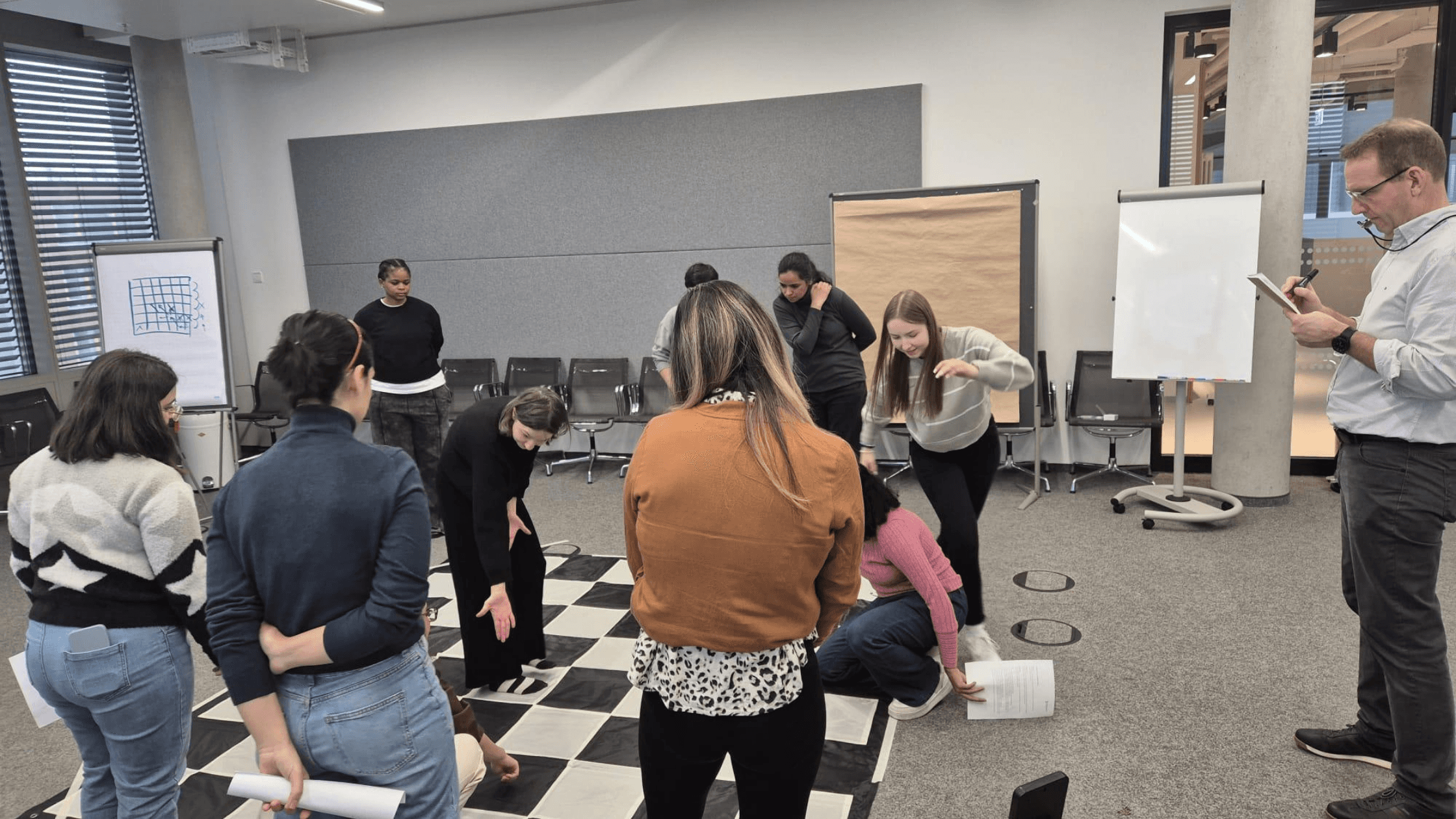
What Happens During Those 2-3 Days: Typical On-Campus Day
Let's walk through what an actual on-campus seminar day looks like to understand the intensity and value of these sessions.
Sample Schedule: Digital Marketing Master's Student - Tuesday
8:45 AM: Arrival and Setup
Arrive at campus via U-Bahn (15-minute commute from WG in Friedrichshain)
Grab coffee from campus café
Review notes from last week and preview today's topics
Chat with classmates about weekend and upcoming project
9:00 AM - 12:00 PM: Digital Strategy Seminar
9:00-9:30: Opening and Framework
Professor introduces today's focus: Omnichannel marketing strategy
Brief theoretical framework of omnichannel approach
Connection to previous sessions on customer journey mapping
Learning objectives and session structure overview
9:30-10:30: Case Study Analysis
Assigned case: Nike's omnichannel retail transformation
Small group analysis (4-5 students per group)
Guided questions about strategic decisions, technology implementation, customer experience
Groups prepare findings for discussion
10:30-10:45: Break
Coffee, stretch, informal discussions with professor and classmates
10:45-11:45: Case Discussion and Debate
Each group presents key insights (5-7 minutes each)
Class debates different strategic approaches
Professor facilitates, challenges assumptions, asks probing questions
Real-world examples from professor's consulting experience
Contemporary relevance discussed (how approach evolved since case)
11:45-12:00: Synthesis and Connection
Key takeaways summarized
Connection to upcoming project work
Preview of next week's content
Questions and clarifications
12:00-1:00 PM: Lunch Break
University mensa (cafeteria) with classmates—€4.50 subsidized student meal
Informal continuation of case discussions
Networking and relationship building
Some students review notes or prepare for afternoon session
1:00-4:00 PM: Marketing Analytics Workshop
1:00-1:30: Analytics Foundations
Guest practitioner from major e-commerce company
Overview of analytics tools and metrics used in industry
Real examples of data-driven marketing decisions
Q&A about how analytics shaped actual campaigns
1:30-2:30: Hands-On Exercise
Live data analysis using Google Analytics demo account
Students work individually on laptops analyzing website performance
Identify conversion optimization opportunities
Calculate key metrics and KPIs
Professor and guest practitioner circulate providing guidance
2:30-2:45: Break
Quick break, stretch, informal questions with guest speaker
2:45-3:45: Small Group Application Exercise
Groups of 3-4 students
Given scenario: Analyze provided data set for hypothetical company
Develop recommendations for improving digital marketing performance
Prepare brief presentation of findings
3:45-4:00: Group Presentations and Feedback
Each group presents key recommendations (3-4 minutes)
Feedback from professor and guest speaker
Discussion of different approaches
Real-world viability assessment
4:00-4:15: Closing and Next Steps
Assignment announced: Individual analytics report due in two weeks
Readings assigned for next session
Group project check-in scheduled for Thursday
Final questions and clarifications
4:15 PM: Session Ends
Some students stay to work on project in campus study spaces
Others leave for part-time jobs or personal commitments
Small group decides to continue project work at nearby café
Evening:
5:00-7:00 PM: Part-time job at marketing startup (Werkstudent position)
7:30 PM: Dinner and gym
9:00-10:30 PM: Complete assigned readings for Thursday's session
Review notes and begin thinking about analytics assignment
Total time commitment for Tuesday:
On-campus: 8 hours (9 AM - 5 PM with breaks)
Part-time work: 2 hours
Reading/preparation: 1.5 hours
Total: 11.5 hours (accounting for commute and meals would add ~2 more hours)
This illustrates the intensity of seminar days—they're demanding, engaging, and productive, not leisurely or easy.
What Happens During "Off" Days: They're Not Actually Off
The days without scheduled on-campus seminars aren't vacation or free time—they're essential for completing the less structured but equally important parts of your education.
Typical "Off Day" Activities
Independent Study and Preparation:
Reading assigned materials for upcoming seminars
Watching recorded lectures (in hybrid/online formats)
Reviewing notes and consolidating learning
Conducting research for assignments and projects
Practicing new skills or techniques
Project Work:
Individual project research and development
Team meetings for group projects (in-person or virtual)
Data collection and analysis
Writing project reports
Developing presentations
Company project coordination (for transfer projects)
Assignment Completion:
Writing case study analyses
Preparing presentations
Completing problem sets or exercises
Creating deliverables for projects
Revising drafts based on feedback
Part-Time Employment:
Werkstudent positions (15-20 hours/week)
Internships or part-time jobs
Applied work that reinforces academic learning
Professional development and networking
Professional Development:
Career Advisory Team consultations
Job searching and applications via Joinnext
Networking events and company visits
Skills workshops and seminars
LinkedIn/CV development
Personal and Administrative:
Managing housing, visa, and life in Berlin
Physical and mental health maintenance
Social activities and cultural exploration
Hobbies and personal interests
Rest and recovery (essential!)
Balancing Studies, Work, and Life: Real Student Strategies
Time Management Approaches That Work
Strategy 1: The Structured Scheduler
Detailed calendar with all commitments blocked
Specific study times scheduled like appointments
Treats personal time and breaks as non-negotiable
Reviews and adjusts weekly
Strategy 2: The Flexible Allocator
General time blocks (mornings for study, afternoons for work, etc.)
Adapts daily based on energy and deadlines
Uses to-do lists rather than rigid schedules
More intuitive, less structured approach
Strategy 3: The Sprint Worker
Intensive focused work periods (Pomodoro technique: 25 minutes work, 5 minutes break)
Longer breaks between sprint sessions
High productivity during work time, complete disconnection during breaks
Works well for project-intensive periods
Most successful students combine elements of all three, adapting based on semester phase, current workload, and personal preferences.
Common Time Management Mistakes to Avoid
1. Underestimating Project Time
Projects always take longer than initially estimated
Start early, not right before deadline
Build in buffer time for challenges and iterations
2. Overcommitting to Work
Working 30+ hours per week makes academic success difficult
Part-time work should enhance, not overwhelm studies
15-20 hours is sweet spot for most students
3. Neglecting Self-Care
Sleep, exercise, nutrition, social connection aren't luxuries
Burnout reduces productivity and learning
Strategic rest improves overall performance
4. Procrastinating Until Exam/Deadline Panic
Continuous assessment means consistent work needed
Cannot cram at end like traditional exam-based programs
Falling behind creates cascading problems
5. Poor Communication
With professors when struggling
With teammates about availability and progress
With employers about academic demands during busy periods
Asking for help early prevents later crises
International Student Considerations
Adjusting to German Academic Culture
Punctuality is sacred:
Classes start exactly on time
Arriving 5 minutes late is noticeable and disrespectful
Germans value precision and reliability
Build punctuality into your personal culture
Quiet hours (Ruhezeiten):
Sundays and evenings (typically 22:00-07:00) are quiet times
Affects when you can study at home or meet groups
Consider library or campus spaces for evening/Sunday work
Respect German cultural norms around noise
Work-life boundaries:
Germans generally separate work and personal life clearly
Evening emails may not be answered until next business day
Respect professors' office hours rather than expecting 24/7 availability
This boundary-setting is healthy—embrace it
Managing Busy Periods: Exam Weeks and Project Deadlines
Even with continuous assessment, some weeks are more intense:
High-Pressure Week Strategies:
1. Triage ruthlessly
What absolutely must be done vs. what can wait or be reduced?
Communicate with employers about needing reduced hours
Let go of non-essential commitments temporarily
Focus on critical path items
2. Use support systems
Study groups for mutual encouragement and efficiency
Career Advisory and professor office hours for guidance
Friends and classmates for emotional support
Don't try to handle everything alone
3. Protect basic needs
Sleep cannot be eliminated without serious costs
Quick, nutritious meals rather than skipping eating
Brief exercise/movement breaks maintain productivity
These aren't luxuries—they're performance requirements
4. Strategic quality management
Some assignments deserve 100% effort
Others can be good-enough at 80%
Perfect is enemy of done
Professional adequacy across all deliverables beats perfection on one and failure on others
5. Remember: it's temporary
Busy weeks pass
Sustained unsustainable pace is... unsustainable
Use intense periods to demonstrate resilience
Return to sustainable rhythm afterward
Conclusion: Flexible Structure for Integrated Success
Steinbeis's 2-3 day seminar schedule isn't about making studies "easier"—it's about making them better, more realistic, and more integrated with the full scope of your professional and personal development.
The structure recognizes that:
Learning happens everywhere, not just in classrooms
Professional experience complements academic study, making both more valuable
Adult learners have complex lives that deserve respect and accommodation
Quality matters more than quantity in educational contact hours
Integration produces better outcomes than artificial separation of learning, working, and living
Students like Sumeyya Icyer found this approach transformative: "Studying Business and Organizational Psychology at Steinbeis has been one of the most rewarding experiences in my academic journey. The program's strong connection between theory and real-world application helped me deepen my understanding of workplace dynamics and human behavior. What I appreciated most was the flexibility to learn at my own pace while working, and the continuous support from academic coaches who truly cared about my progress."
That flexibility, real-world connection, and support—all enabled by the 2-3 day schedule structure—create conditions for genuine learning, professional growth, and personal development simultaneously.
When you choose Steinbeis, you're not just signing up for classes—you're entering an integrated educational experience that respects your full humanity, prepares you comprehensively for career success, and gives you time to actually live, work, and thrive in one of Europe's most exciting cities.
Ready to experience education designed around real life, not artificial academic silos? Apply to Steinbeis University and begin your integrated journey of learning, working, and growing in Berlin.

Steinbeis University - Schools of Next Practices: Where 2-3 days of intensive seminars + flexible time for projects, work, and life = comprehensive education for modern careers.