Study Formats at Steinbeis University: On-Campus, Online, and Hybrid Options for Maximum Flexibility
Choosing where and how you'll study is as important as choosing what you'll study. In today's educational landscape, flexibility matters—especially for international students balancing career goals, work commitments, visa processes, and personal circumstances. At Steinbeis University - Schools of Next Practices, we understand that one size doesn't fit all. That's why we offer on-campus, online, and hybrid study formats that adapt to your life rather than forcing you to adapt to rigid structures. This comprehensive guide explains all your study format options and helps you determine which approach best suits your goals, circumstances, and learning preferences.
Understanding Study Formats: What Are Your Options?
Before diving into specifics, let's clarify what each study format means at Steinbeis University and how they differ from traditional university models.
On-Campus Programs: The Berlin Experience
What it is:
Physical attendance at Steinbeis University's Berlin campus for face-to-face seminars, workshops, and project sessions. You're based in Berlin, attend classes in person, and experience full immersion in Germany's vibrant capital.
Key characteristics:
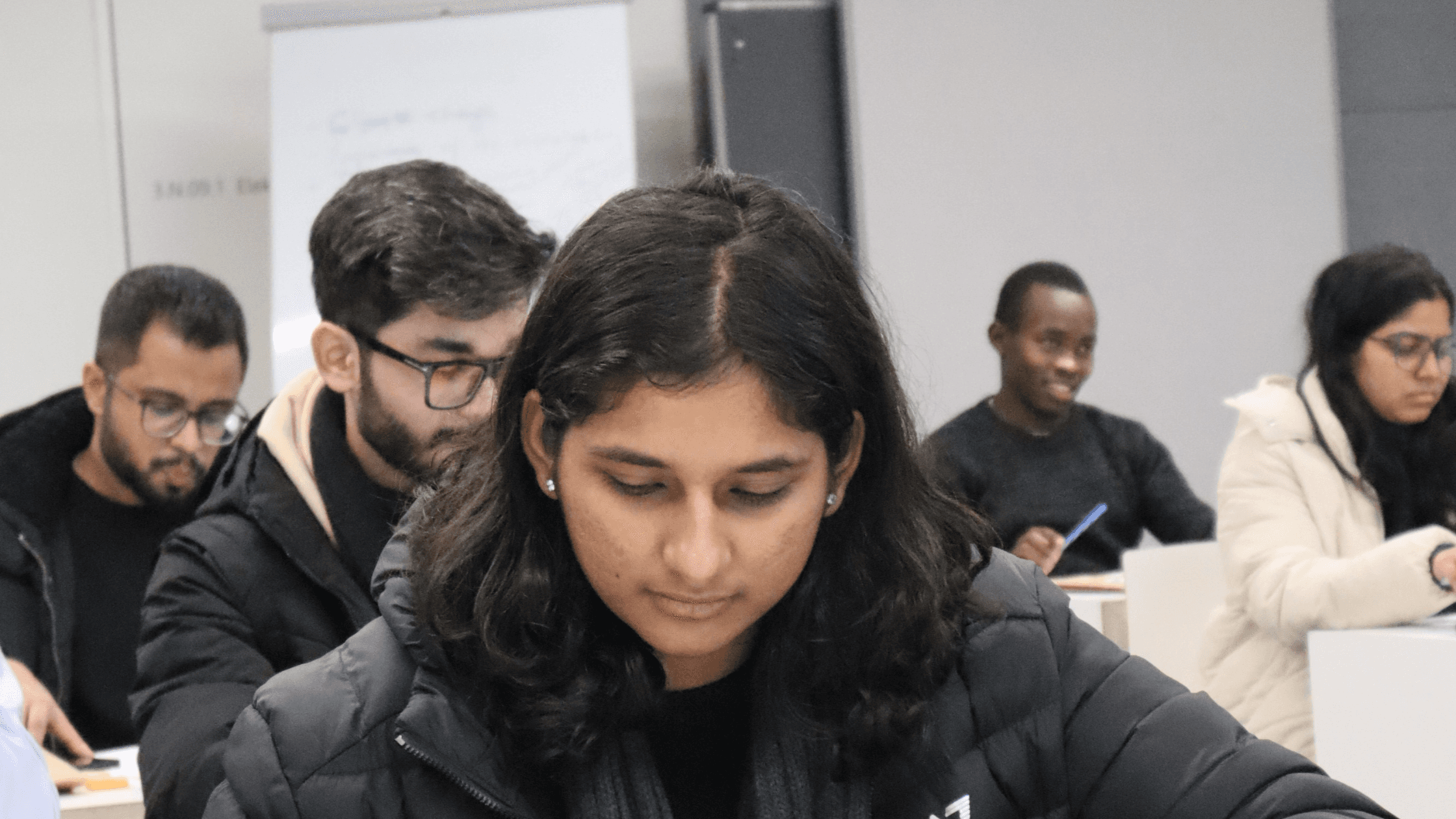
Regular in-person seminars at our centrally-located Berlin campus
Face-to-face interaction with professors, industry practitioners, and classmates
Access to campus facilities, libraries, and resources
Networking opportunities through in-person events and activities
Complete Berlin living experience—culture, social life, career opportunities
Typical schedule: 2-3 days per week on campus (more on this below)
Ideal for:
Students who thrive in physical classroom environments
Those seeking the complete international study experience
Students wanting to build strong in-person networks
Career-focused individuals who want proximity to Berlin's job market
People who learn best through direct interaction and collaborative environments
Online Programs: Study From Anywhere
What it is:
Complete your entire degree remotely through digital platforms, live virtual seminars, and online project collaboration. You can study from your home country or anywhere with reliable internet connection.
Key characteristics:
Live virtual seminars via Zoom or similar platforms
Recorded lectures available for flexible viewing
Digital learning materials, resources, and platforms
Online collaboration tools for group projects
Virtual office hours and support from faculty
No requirement to relocate to Germany (though you can visit)
Full degree completion possible without setting foot in Berlin
Ideal for:
Working professionals who cannot relocate immediately
Students with family or personal commitments requiring them to stay in current location
Those who want German degree while managing current career
Students testing whether Steinbeis is right before committing to relocation
People with visa challenges who need to start studies while processing paperwork
Those preferring self-paced learning with recorded content flexibility
Hybrid Programs: The Best of Both Worlds
What it is:
Combine online and on-campus elements flexibly throughout your program. You might start online and transition to Berlin later, alternate between formats semester by semester, or participate in predominantly online program with occasional on-campus intensive sessions.
Key characteristics:
Flexibility to adjust format based on changing circumstances
Start remotely and relocate to Berlin when ready
Participate online during certain semesters, on-campus during others
Intensive on-campus modules combined with online coursework
Maintain continuity if you need to travel or relocate temporarily
Adapt your study format to life changes without interrupting education
Ideal for:
Students wanting eventual Berlin experience but not immediately ready
Those with fluctuating work or personal commitments
Students processing visas who want to start before arrival
People who want campus immersion for networking while maintaining location flexibility
Career changers gradually transitioning from current work to studies
Transnational Programs: Germany Meets Global
What it is:
Programs delivered in partnership with international institutions or designed for global cohorts, combining German educational standards with international perspectives and sometimes multi-location components.
Key characteristics:
German degree with international curriculum delivery
May include modules delivered in multiple countries
International cohort with truly global perspectives
Steinbeis quality and standards maintained across locations
Option to complete portions in Germany and portions elsewhere
Unique combination of German credentials with international exposure
Ideal for:
Students seeking global perspectives alongside German credentials
Those wanting international network spanning multiple countries
People interested in comparative approaches across education systems
Students with existing connections to specific partner institutions
Career goals requiring both German and broader international experience
The Flexibility Advantage: Why Steinbeis Offers Multiple Formats
Traditional universities typically lock you into one study format from day one. If you choose on-campus, you're committed to physical attendance. If you choose online, you're isolated from campus life. Steinbeis takes a different approach based on a simple recognition: your circumstances, goals, and preferences may evolve during your studies.
Real-World Scenarios Where Flexibility Matters
Scenario 1: Visa Processing Delays
Maria from Brazil was accepted to the Digital Marketing Master's program with a September start date. Her visa appointment was scheduled for August, but processing took longer than expected. Rather than defer her entire program by six months, Maria started online in September and transitioned to Berlin campus in November once her visa was approved. She didn't lose a semester and wasn't left behind academically.
Scenario 2: Career Transition
Ahmed from Egypt worked full-time in Cairo but wanted to pursue a Master's in Data Analytics & AI. He couldn't immediately quit his job and relocate. He started online, studying while working, and after one year when he'd saved sufficient funds and built relevant experience, he resigned and moved to Berlin for the remainder of his program—bringing work experience that enriched his classroom contributions.
Scenario 3: Family Emergency
Jennifer from the UK was studying on-campus in Berlin when a family health crisis required her to return home for several months. Rather than interrupting her studies entirely, she continued her coursework online during that period and returned to campus once the situation stabilized. Her education continued without disruption.
Scenario 4: Job Opportunity
Michael from India completed his first year on-campus in Berlin and secured an excellent internship opportunity in Munich. Rather than choosing between the internship and his studies, he continued his program online while gaining valuable work experience, demonstrating the real-world applicability of his education.
These aren't hypothetical edge cases—they're common realities for international students navigating complex lives, careers, and circumstances. Steinbeis's flexible formats accommodate life rather than forcing life to accommodate rigid academic structures.
Deep Dive: On-Campus Programs in Berlin
Let's explore each format in detail, starting with the full Berlin on-campus experience.
What "On-Campus" Means at Steinbeis
Unlike some traditional universities with sprawling suburban campuses isolated from city life, Steinbeis is embedded in Berlin itself. Our campus is centrally located with excellent public transport connections, placing you at the heart of Germany's capital—its startup ecosystem, corporate headquarters, cultural institutions, and vibrant international community.
Campus location advantages:
Minutes from major business districts and company headquarters
Easy access via U-Bahn, S-Bahn, buses (your semester ticket covers all)
Surrounded by cafés, restaurants, cultural venues
Walking distance to parks, museums, and Berlin attractions
Integrated into Berlin's fabric rather than isolated academic bubble
Physical facilities:
Modern classrooms designed for interactive learning
Project collaboration spaces
Computer labs and technology resources
Library and study areas
Student lounges and social spaces
Administrative support services
The On-Campus Experience: What Your Day Looks Like
Typical weekly schedule: Classes are NOT held five days per week like some traditional models. Instead:
2-3 days per week of scheduled on-campus seminars (usually weekdays)
Remaining days available for independent study, group projects, part-time work, or personal pursuits.