If you're an engineer, data scientist, or tech professional with your eyes on healthcare AI, Germany isn't just an option. It's the answer. Here's why.
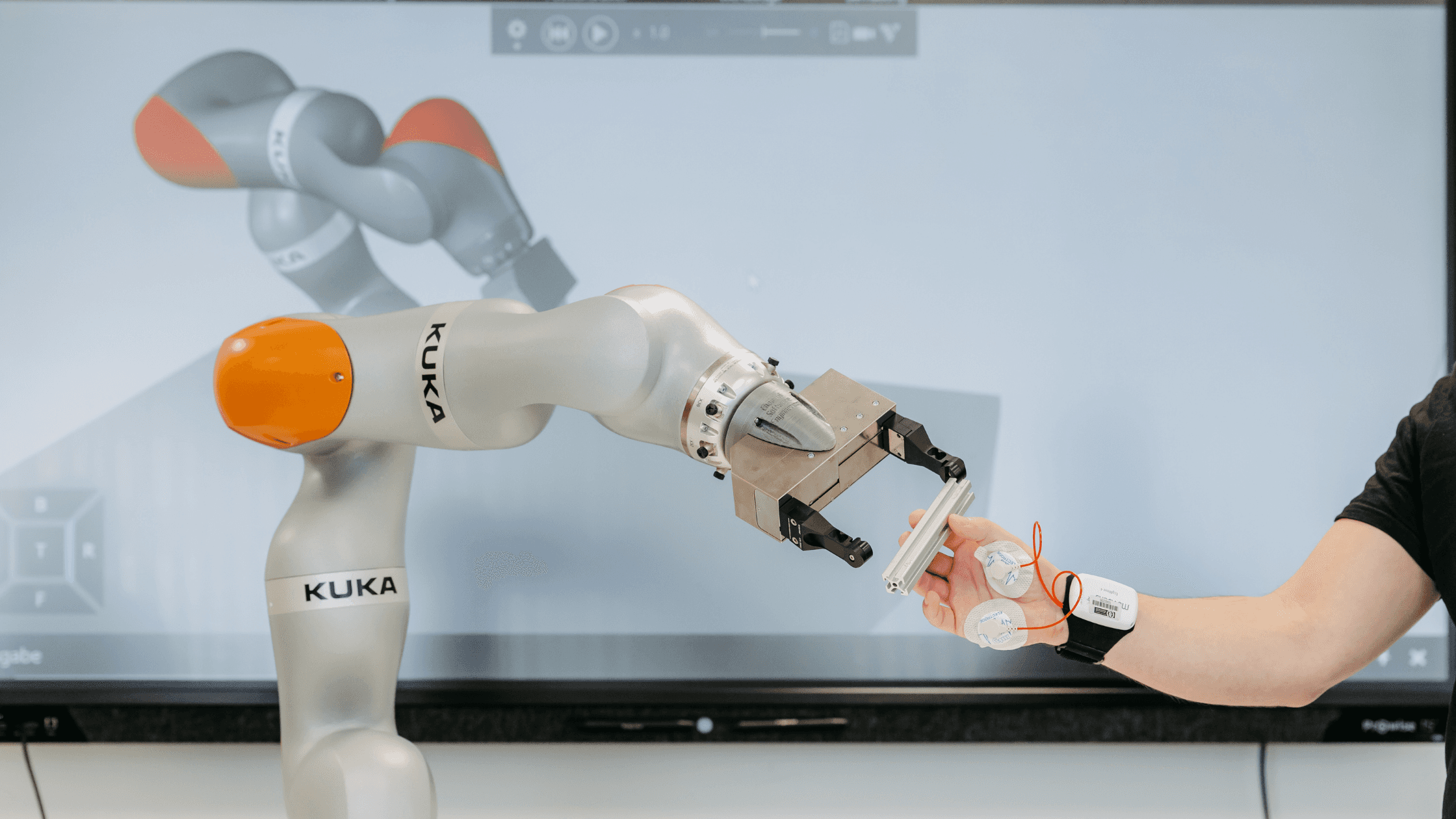
The AI revolution in healthcare is not something that's coming. It's here. AI is already reading cancer scans, monitoring stent-implanted hearts, predicting disease a decade before symptoms appear, and redesigning surgical instruments. And the country at the centre of this transformation is Germany - home to some of the world's most important medtech companies, a €4.3 billion digital health investment mandate, and the most engineer-friendly immigration policy in Europe. If you have a background in engineering, computer science, physics, or a related technical field, and you want to build the technologies that improve how medicine is practised, this is the place, and this is the moment.
What AI Is Actually Doing to Medical Technology Right Now
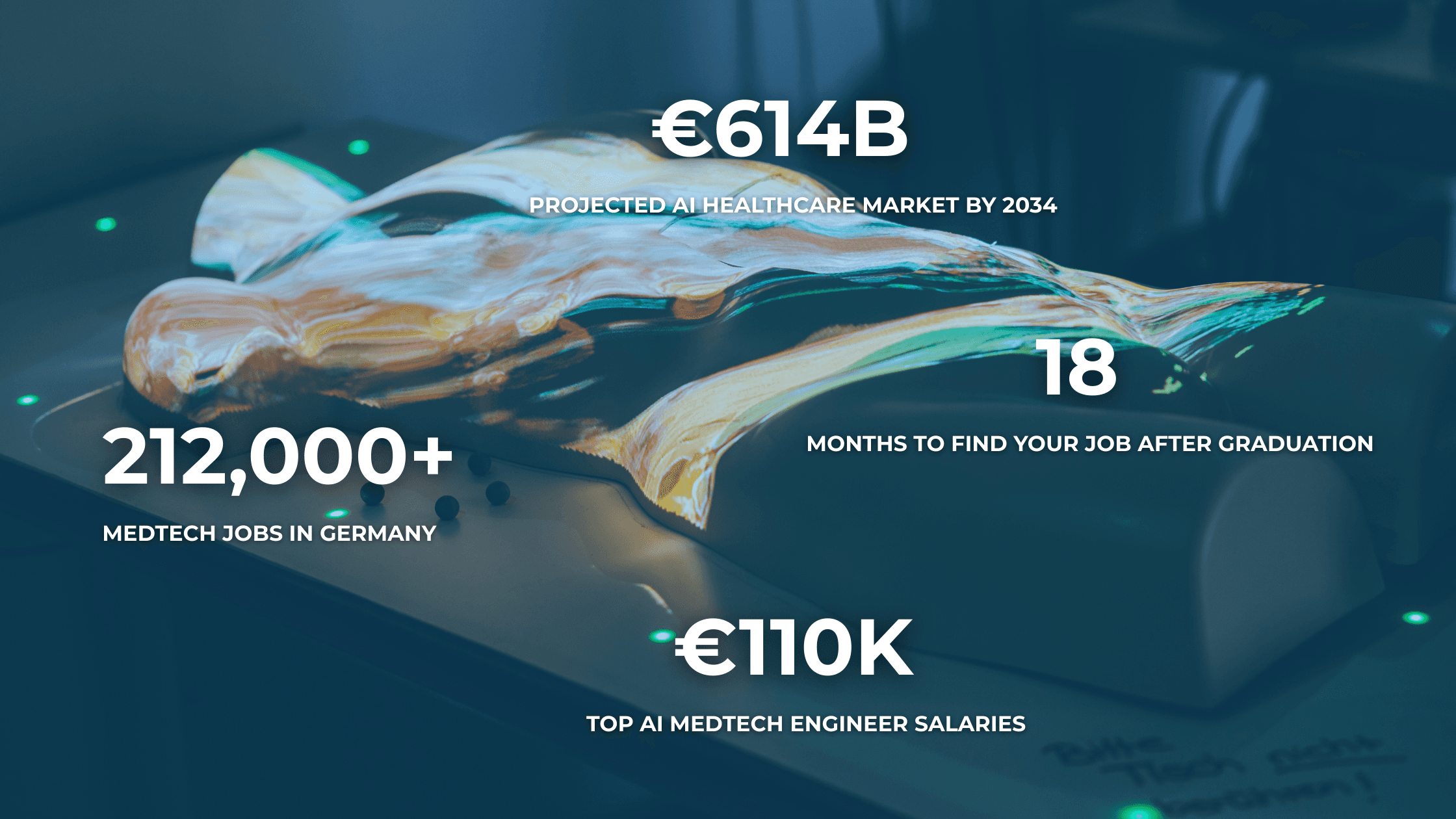
The global AI-in-healthcare market was worth approximately $27 billion in 2024. By 2034, analysts project it could reach $614 billion — an average annual growth rate of around 44% for two decades. In Germany, the AI healthcare market in medical imaging alone is projected to reach nearly $188 million by 2033, with the broader German AI market expected to grow at a 30% annual rate to hit $106 billion by 2030. This isn't a future industry. It's a current employment crisis — companies simply do not have enough qualified engineers to fill the roles being created.
So what does this actually look like in practice? Here are the AI advances already reshaping medical technology today:
AI-Powered Medical Imaging & Diagnostics
In Germany, AI platforms are being deployed across radiology to prioritize critical findings, detect emphysema, measure cardiac parameters automatically, and reduce radiologist workload. Germany's AI in medical imaging is growing at a 13% compound annual rate, and AI-assisted imaging is now described as a must-have in modern clinical settings, not a luxury add-on.
Cardiac Monitoring & Stent Management
German research teams have developed AI algorithms that automate the monitoring of patients with coronary stents, distinguishing different healing patterns from blood vessel imaging with expert-level accuracy. Tools like this that were experimental five years ago are entering clinical deployment today — and they need engineers to build, validate, and iterate them.
Predictive Disease Modeling
AI models can now predict more than 1,000 medical conditions — including certain cancers, heart attacks, and diabetes — more than a decade before formal diagnosis. Germany's forthcoming Health Data Lab will give researchers access to data from 75 million insured individuals, creating an unprecedented opportunity for AI-driven precision medicine research.
Surgical Robotics & AI-Assisted Surgery
Robotic-assisted surgical systems are increasingly AI-enhanced, performing minimally invasive procedures with greater precision. The integration of AI in oncology — automatically contouring tumours for radiotherapy planning — is dramatically reducing manual preparation time, with companies like Siemens Healthineers (through its Varian acquisition) leading this work globally.
Drug Discovery & Clinical Trial Matching
AI is accelerating drug discovery pipelines, with a typical top pharmaceutical company projected to save over $1 billion in five years through AI deployment. AI-powered clinical trial matching tools are streamlining how patients connect with research programmes, combining natural language processing with deep medical knowledge in ways that need skilled AI engineers to develop and maintain.
Personalised Prosthetics & Regenerative Medicine
AI-driven personalised prosthetics design uses patient scans and activity profiles to improve fit and reduce production time. Combined with advances in 3D printing, stem cell therapy, and bioreactor systems, this is one of the fastest-growing engineering sub-fields in European medtech — heavily clustered in Germany's manufacturing regions.
Why Germany is the World's Best Country to Study AI & Medical Technology
There are excellent universities on every continent. So the question isn't just "where can I study AI in medtech?" It's "where will studying AI in medtech actually transform my career?" Germany's answer to that question is unusually convincing — for reasons that go well beyond academic reputation.
Germany is the Medtech Capital of Europe
With more than 1,500 medical technology companies and over 212,000 employees, Germany's medtech sector generates over €55 billion in annual sales and exports 68% of its output globally. Alongside the US and Japan, Germany is one of three countries with the highest concentration of medical technology suppliers on the planet. This isn't a country with a few impressive companies — it's a country where medtech is woven into the industrial fabric of entire regions.
The Government Is Investing at Scale
Germany's federal government has allocated €4.3 billion through 2026 specifically for digital health infrastructure, electronic health records, telemedicine platforms, and AI-driven diagnostic tools. This direct government stimulation of the private sector is creating thousands of new technical roles — and the companies hiring for these roles need people who graduate with both engineering rigour and AI fluency. That's precisely the profile of a Steinbeis MSc in AI & Medical Technologies graduate.
Germany is Building Europe's AI Health Data Infrastructure
Germany's forthcoming Health Data Lab will provide federated access to health data from 75 million insured individuals — 90% of the country's population. Combined with the European Health Data Space covering 449 million EU citizens, Germany is creating one of the most significant AI research environments in global healthcare. Engineers trained here will work with data infrastructure that simply doesn't exist at this scale anywhere else.
Career Safety: Why an MSc in AI & Medical Technologies is One of the Most Future-Proof Degrees on Earth
Let's be honest about what "career safety" really means in the 2020s: it means being in a field that AI cannot replace, that is growing faster than the overall economy, and that produces skills that transfer across borders and industries. An MSc in AI & Medical Technologies, specifically one that blends engineering foundations with AI application in healthcare — checks every single one of those boxes.
The demographic reality accelerating all of this: Germany has an ageing population that is placing increasing demand on healthcare systems, alongside a nationwide shortage of skilled technical talent. This creates a structural, long-term demand for exactly the kind of professionals this programme produces. You are not entering a crowded market. You are entering a talent shortage.
Career Paths: What You Can Do With an MSc in AI & Engineering for Medical Applications
The degree sits at the intersection of three of the most in-demand skill sets of the next decade: artificial intelligence, engineering, and healthcare. Graduates aren't limited to one job title or one sector. Here are the roles most aligned with this programme — and the salary ranges you can expect in Germany in 2025.
AI Medical Device Engineer
Design and develop AI-powered medical devices — from smart implants to intelligent imaging systems. Works at the intersection of hardware engineering, machine learning, and medical compliance standards.
Medical Imaging AI Engineer
Build and deploy deep learning models for MRI, CT, ultrasound and X-ray analysis. One of the fastest-growing roles in German medtech, with 75% of current approved AI medical applications sitting in radiology and cardiology.
Healthcare Data Scientist / ML Engineer
Analyse complex clinical datasets, build predictive models for diagnostics, patient monitoring, and outcome prediction. Germany's booming data infrastructure makes this one of the most exciting roles in European healthcare.
Biomedical Research Scientist
Conduct cutting-edge research applying AI to drug discovery, genomics, or regenerative medicine. Ideal for graduates interested in the research pipeline rather than commercial product development.
Clinical AI Systems Engineer
Implement and validate AI clinical decision support systems within hospital infrastructure. Requires deep knowledge of both the engineering and the clinical workflow — a rare and highly valued combination.
Regulatory Affairs Specialist (AI/MedTech)
Navigate EU MDR compliance, CE marking, and AI clinical evidence requirements for medical products. Critically important as AI devices require specialist validation engineers who understand both the technology and the regulatory landscape.
Deep Learning Research Engineer
Develop production-grade neural networks for healthcare applications — from protein structure prediction to surgical robotics. Senior specialists in Germany can command some of the highest engineering salaries in Europe.
Digital Health Product Manager (Technical)
Lead AI-enabled healthcare product development from concept to market, bridging clinical need, engineering capability, and business strategy. A natural evolution for engineers with 4-6 years of experience.
One of the underappreciated aspects of this degree profile: the skills are transferable globally. An engineer trained in AI for German medical devices can work at companies across the EU, in the US, in Asia, or in emerging medtech hubs — because the engineering principles and the AI methods are universal, even if the regulatory frameworks vary.
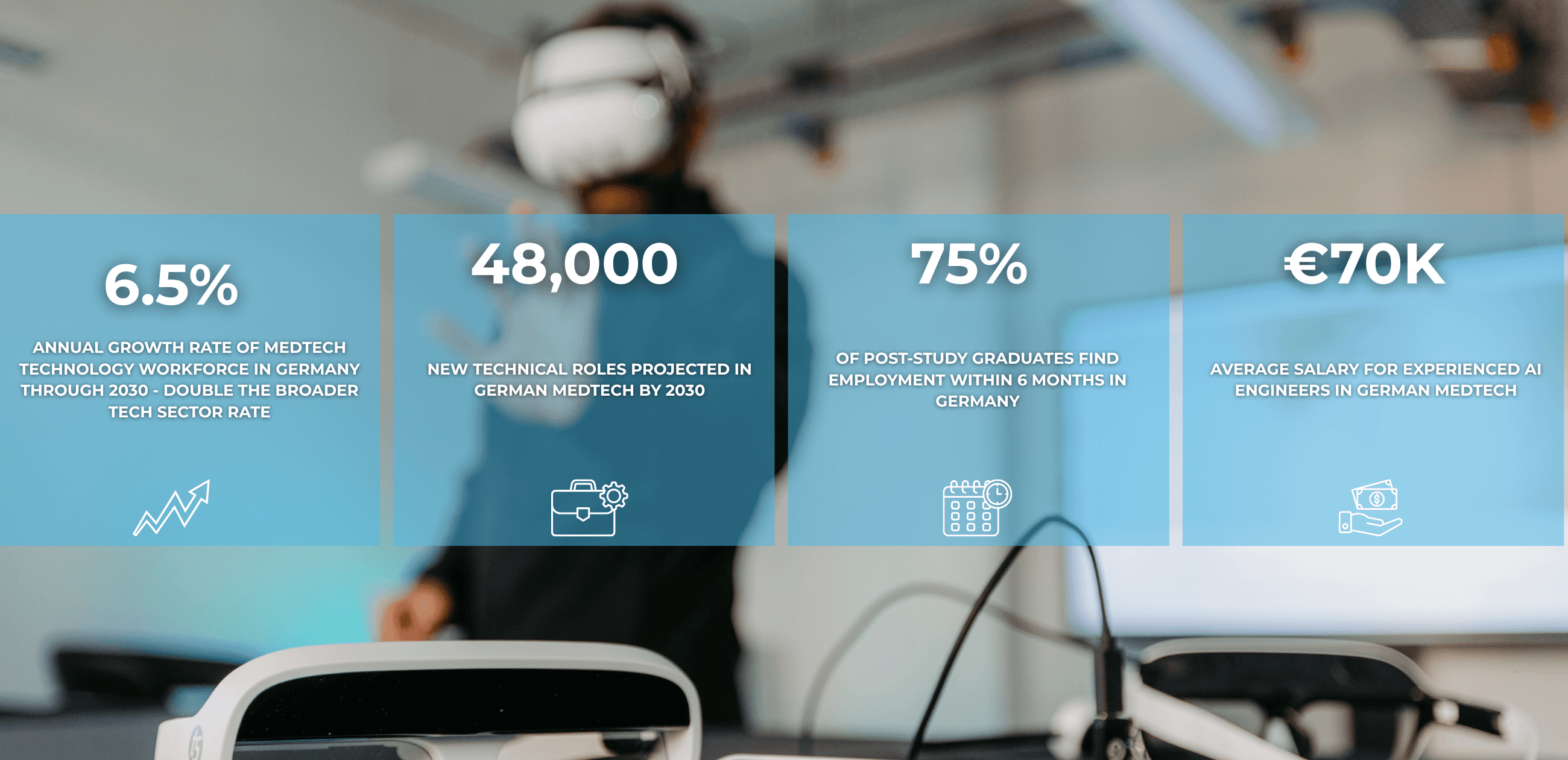
The Companies Hiring AI & Medical Engineering Graduates in Germany
Germany and its neighbouring countries are home to a cluster of global medical technology companies that are actively expanding their AI and engineering teams. These are the names graduates of programmes in AI & Medical Technologies are appearing on LinkedIn as working for within months of completing their degree.
Siemens Healthineers - Global HQ: Erlangen, Germany · 73,000+ employees · AI imaging, diagnostics, oncology AI
Carl Zeiss Meditec - Germany · AI-assisted ophthalmology and neurosurgery systems
B. Braun Melsungen - Germany · Smart surgical instruments, hospital equipment AI integration
Fresenius Medical Care - Germany · AI-driven dialysis technology and personalised care
Drägerwerk - Germany · AI in respiratory equipment and critical care
GE HealthCare - Germany operations · AI radiology, diagnostic imaging platforms
Philips Healthcare - Netherlands/Germany operations · Patient monitoring, AI-guided therapy
Roche Diagnostics - Switzerland/Germany · AI-driven diagnostics, digital pathology
Ottobock - Germany · AI-enhanced prosthetics, neurorehabilitation engineering
Caresyntax - Berlin startup · AI surgery
Beyond these names, Germany's medtech sector includes over 1,500 companies — the majority of them mid-sized, innovative, and actively recruiting. Regional clusters in Munich (imaging and diagnostics), Berlin (digital health), Magdeburg (life sciences and medical engineering), Hamburg (innovation hubs), and Tuttlingen (surgical instruments) mean that wherever you settle in Germany, you're close to medtech employers.
Why Studying in Germany Makes Financial Sense — Even Before You Get a Job
The financial case for studying in Germany is often the detail that surprises prospective international students most. Germany has one of the most affordable graduate education systems in the world for international students, especially compared to anglophone alternatives.
Studying in Germany | Other Countries |
|---|
Annual Tuition Fees | Programme-based | Annual tuition fees | £20k - £50k/yr |
Monthly living cost (Magdeburg) | €700–€900 | Monthly living cost | £1,500 - £ 2,500 |
Health Insurance | €146 +/- | Health Insurance | Variable |
Post-study job search time | 18 months | Post-study job search time | 2 years |
Working hours during studies | Up to 20hrs | Working hours during studies | 20hrs/week |
Graduate salary (Entry,medtech) | €45k - €60k | Graduate Salary (entry,medtech) | Variable |
Degree recognised in | EU + 100+ countries | Degree recognised in | Primarily domestic |
The 18-Month Job Seeker Visa: Germany's Secret Weapon for International Graduates
This is the provision that changes everything for international students, and it's not well known enough. When you graduate from a German university, you are legally entitled to stay in Germany for up to 18 months - not to study, but specifically to find a job that matches your degree. This is called the residence permit for job-seeking (§20 AufenthG), and it is one of the most generous post-study work provisions in the world.
01 You Complete Your Degree at Steinbeis
Your student residence permit is still valid. The 18-month clock starts from the date you officially graduate - giving you time to apply before your student permit expires.
02 Apply for the Job Seeker Residence Permit (§20 AufenthG)
Convert your student permit to a job seeker permit from within Germany - no need to return home first. You'll need your graduation certificate, proof of financial means, and valid health insurance.
03 Work and Search for 18 Months - Unrestricted
During this period, you can take any job to support yourself - including unrelated work - while you search for your ideal role in AI medtech. You can attend interviews, network, and build industry relationships with no time pressure.
04 Land Your Qualified Role & Convert to Work Permit or EU Blue Card
Once you secure a qualified position in your field, you switch directly to a work residence permit or EU Blue Card - no need to leave Germany. The EU Blue Card requires a minimum gross annual salary of approximately €48,300 in shortage occupations (like medtech engineering).
05 Path to Permanent Residency Begins
With a work permit, you're on the path to permanent residency - typically after 21 months with an EU Blue Card, or 5 years on a standard work permit. Germany is actively trying to retain international talent, and this pathway reflects that commitment.
One important note: you are entitled to this permit, it is not discretionary if you've successfully completed your degree at a German university. Approval rates are high for graduates who meet the requirements and submit their documentation on time.
The MSc in AI & Engineering for Medical Applications, Magdeburg
At Steinbeis University, the Master in AI & Engineering for Medical Applications based in Magdeburg is designed specifically for the convergence of these forces. It's not a generic engineering programme with an AI elective. It's a curriculum built for the era of intelligent medical devices - combining rigorous engineering training with applied AI for healthcare.
The curriculum spans advanced medical imaging, machine learning algorithms for diagnostics, intelligent medical device development, biomedical data analytics, and hands-on project work. Students graduate with the technical depth to work across the AI medtech stack - from algorithm development and device engineering to clinical validation and regulatory compliance - a combination that is genuinely rare in the current talent market.
Who is this programme for? If you hold a bachelor's degree in electrical engineering, information technology, computer science, physics, mathematics, or a closely related technical field - and you want to direct your technical skills toward healthcare impact - this programme was designed for your profile. Industry experience of one year or more (including internships or research) is valued. The programme is taught in English, removing a common barrier for international students.
Why Magdeburg Is a Smarter Choice Than You Think
Magdeburg is not the most famous German city. That's actually part of the advantage. While international students compete for accommodation and part-time jobs in Berlin and Munich, Magdeburg offers something increasingly rare: space to focus.
The city is home to Otto-von-Guericke University, one of Germany's leading technical universities with strong ties to the life sciences and medical technology industries. The surrounding Saxony-Anhalt region has a growing cluster of pharmaceutical, life science, and medical technology companies. Living costs are substantially lower than Berlin - students typically spend €700–€900 per month - while the quality of life infrastructure (public transport, healthcare, safety, green space) is excellent.
Magdeburg is approximately 90 minutes from Berlin by train, meaning students have access to Berlin's startup ecosystem, international network, and major employers while benefiting from a more focused study environment. For those interested in the broader German medtech industry, Magdeburg's central location in Germany makes it accessible to clusters in Hamburg, Hanover, Leipzig, and beyond.
Why Magdeburg Is a Smarter Choice Than You Think
Magdeburg is not the most famous German city. That's actually part of the advantage. While international students compete for accommodation and part-time jobs in Berlin and Munich, Magdeburg offers something increasingly rare: space to focus.
The city is home to Otto-von-Guericke University, one of Germany's leading technical universities with strong ties to the life sciences and medical technology industries. The surrounding Saxony-Anhalt region has a growing cluster of pharmaceutical, life science, and medical technology companies. Living costs are substantially lower than Berlin - students typically spend €700–€900 per month - while the quality of life infrastructure (public transport, healthcare, safety, green space) is excellent.
Magdeburg is approximately 90 minutes from Berlin by train, meaning students have access to Berlin's startup ecosystem, international network, and major employers while benefiting from a more focused study environment. For those interested in the broader German medtech industry, Magdeburg's central location in Germany makes it accessible to clusters in Hamburg, Hanover, Leipzig, and beyond.
The Honest Answer to "Why Germany?"
Here is the thing about engineering careers in AI and medical technology: the field is genuinely global. A well-trained AI engineer can work in London, Singapore, Toronto, or São Paulo. So the question isn't just "where can I get this degree?" It's: "where will this degree give me the best combination of education quality, career access, financial sense, and post-graduation security?"
Germany's answer to that question is hard to beat. Europe's most important medtech industry as your employment market. Government-backed investment at €4.3 billion actively creating the jobs you want. An 18-month guaranteed right to remain after graduation — no lottery, no uncertainty, just time to find the right role. An EU Blue Card pathway to permanent residency for qualified engineers. Lower living costs than the UK, US, or Australia. And a degree that is recognised and respected across every major economy in the world.
The AI revolution in healthcare is not waiting. The companies building it are not waiting. The question is whether you will be in the room when the most important work of the next decade gets done - or watching it from somewhere else.