Apr 20, 2026
5 Reasons Software Engineers Are Moving to Chip Design (And Why NOW)
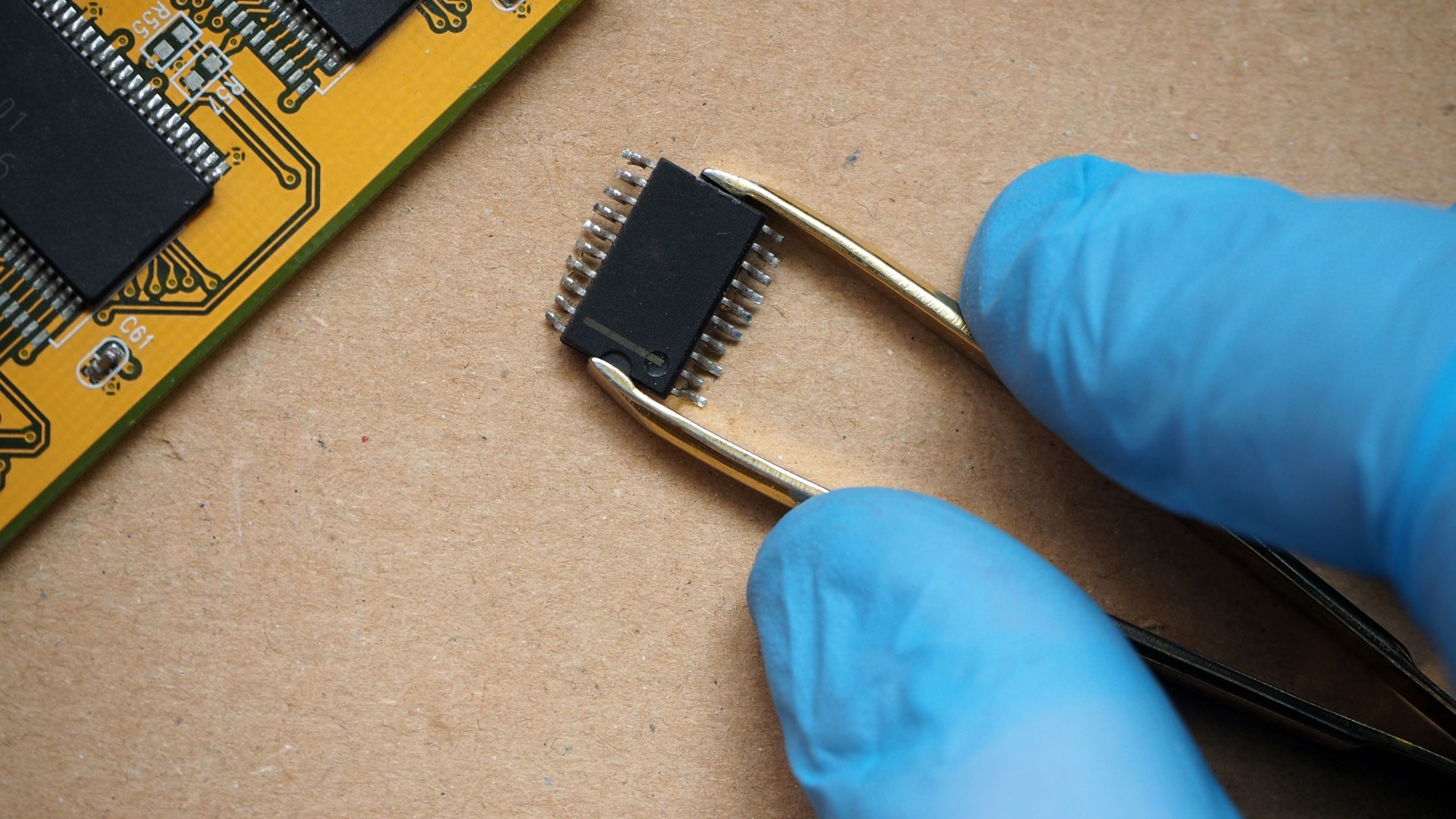
The semiconductor industry is quietly pulling some of tech's sharpest minds away from purely software roles, and the timing couldn't be more strategic.
1. Software Has Hit a Hardware Wall
For years, Moore's Law gave software engineers a free ride: write your code today, and faster chips would make it run better tomorrow. That era is over. Clock speeds have plateaued, and the performance gains now come from chip architecture- heterogeneous computing, custom silicon, neuromorphic designs. Engineers who understand both sides of this boundary are becoming extraordinarily valuable.
Software teams are increasingly being asked to co-design with hardware. If you can't read a datasheet, understand memory hierarchies, or communicate with an RTL designer, you're working at a disadvantage. Many software engineers are recognising this, and doing something about it.
2. The Compensation Gap Is Closing - Then Opening the Other Way
Semiconductor engineering salaries have historically lagged behind top software roles at FAANG companies. That's no longer true. As chip demand has exploded — driven by AI accelerators, automotive electronics, and 5G — specialised semiconductor engineers are commanding premium compensation packages across Europe and globally.
• TSMC, Intel, Infineon, and NXP are actively expanding European design centres
• Embedded hardware and chip verification roles are among the hardest to fill in Germany right now
• Engineers with both software fluency and hardware knowledge are doubly attractive to employers
3. AI Is Built on Silicon - And AI Engineers Are Realising It
Training a large language model requires custom silicon. Deploying it at the edge requires even more specialised chip design. The engineers who built those models are now some of the most motivated to understand the hardware underneath them.
"Building these large language models is kind of like taping out a chip." — Jensen Huang, CEO of Nvidia (VentureBeat, May 2023)
From GPU architecture to in-memory computing and photonic chips, the next frontier of AI will be decided in the fab, not just in the model. Computer scientists who cross this boundary now will be positioned to lead it.
4. Europe's Industrial Base Is Betting on Semiconductors
The European Chips Act has committed €43 billion to semiconductor self-sufficiency by 2030. Germany, in particular, is home to one of the densest concentrations of semiconductor manufacturers and equipment suppliers in the world — including Infineon, TRUMPF, and a network of Mittelstand firms that underpin global supply chains.
This is not a bubble. The investment is structural, driven by supply chain security concerns that have permanently changed how governments and corporations think about chip sourcing. That means sustained, long-term demand for engineers who can design, manufacture, and maintain these systems.
5. Your Software Background Is an Advantage, Not a Disadvantage
The semiconductor industry has long struggled to recruit people who can bridge the gap between software systems and physical hardware. Computer scientists bring skills that are genuinely rare in traditional chip engineering teams: systems thinking, algorithm design, comfort with abstraction, and experience working with complex toolchains.
Many of the most exciting areas in chip design - design verification, EDA software, hardware-software co-optimisation, FPGA programming - are fields where a software background is not just acceptable but actively preferred.
Want to take the next step? Checkout Our Collaboration Program to start your career journey!
<MSc. Eng. SEMiCS>
FAQs
Find answers to your most common questions about S-NEXT MSc Programs

Is this MSc degree recognized in Germany?
Yes. The MSc program is a recognized higher education degree in Germany and internationally, subject to specific program requirements.
What are the admission requirements?
In which language is the program taught?
Is the program full or part-time?
How is the MBA 90 ECTS program delivered?
Does this program support international students applying for a German student visa?
Can international students work while studying in Germany?
What is the difference between the MBA 60 ECTS and the MBA 90 ECTS?
Is there a Master’s thesis?
Does the program qualify to continue in a PhD program?